
Why Static Question Banks Fail Competitive Exam Aspirants and How Smart Retrieval AI Fixes It
Target SEO Keywords (High-Intent): Smart Retrieval AI for competitive exams Best MPSC preparation AI tool RAG AI exam preparation India Dynamic vs static question banks competitive exams 5 minute daily live test MPSC Marathi Hindi High probability PYQ question generator Why Static Question Banks Fail Competitive Exam Aspirants and How Smart Retrieval AI Fixes It Every year, millions of ambitious aspirants across India embark on grueling preparation journeys for high-stakes competitive examinations such as MPSC, UPSC, NEET, and JEE. They spend thousands of rupees on thick reference volumes, enrollment in coaching centers, and massive physical or digital static question banks. Yet, despite dedicating 10 to 12 hours a day to relentless studying, a vast majority find themselves stuck in a frustrating loop of stagnant scores and repeated attempts. Why does this happen? The fundamental flaw rarely lies in the aspirant’s dedication or intellect; rather, it lies in the archaic tools they rely upon. Traditional, static question banks—whether printed books, passive PDFs, or generic test series—are fundamentally unequipped to keep pace with the rapidly evolving, dynamic patterns of modern Indian competitive exams. They promote passive rote learning, lack personalized context, contain outdated questions, and fail to provide actionable, real-time analytics. To break through the noise and secure top ranks in today's hyper-competitive landscape, aspirants need a paradigm shift. Enter Smart Retrieval AI powered by Retrieval-Augmented Generation (RAG). By blending cutting-edge artificial intelligence with authentic previous year papers (PYQs) and standard reference materials, smart AI platforms are completely revolutionizing how candidates prepare. In this article, we explore why static question banks are failing you and how Preplearly AI leverages smart retrieval technology to accelerate your exam readiness. Key Takeaways The Static Limitation: Traditional question banks rely on fixed, often outdated question sets that do not reflect recent trends or dynamic exam pattern shifts in MPSC, UPSC, NEET, and JEE. The Power of RAG AI: Retrieval-Augmented Generation (RAG) processes authentic PYQs and standard reference books to generate highly accurate, high-probability practice questions. Localized Learning: Multilingual support across English, Marathi, and Hindi breaks language barriers, offering deep, contextual explanations in the candidate's preferred language. Efficiency Through Fast-Track Testing: 5-minute daily live tests with instant rank analytics build exam confidence without inducing study burnout. Preplearly AI Advantage: An all-in-one smart preparation platform available on Web and Android App (iOS coming soon), currently tailored for MPSC Group C, with UPSC, NEET, and JEE launches on the horizon. The Fatal Flaws of Static Question Banks in Modern Competitive Exams For decades, solving 5,000 to 10,000 static questions was considered the gold standard of exam prep. However, as examining bodies like the Maharashtra Public Service Commission (MPSC) and NTA continually raise the bar for conceptual clarity and analytical reasoning, static question banks have revealed critical deficiencies: 1. Outdated Exam Trends & Dynamic Pattern Shifts Static books and printed test series are frozen in time from the date of their publication. Examining bodies frequently pivot their questioning style—shifting from direct factual recall to multi-statement conceptual questions, assertion-reasoning formats, and cross-disciplinary applications. A static paper bank published two years ago cannot predict or adapt to last month's updated curriculum or novel question trends. 2. Passive Rote Learning vs. Active Conceptual Retrieval Glancing through thousands of static questions creates an illusion of competence known as the "recognition heuristic." Aspirants feel they know the answer simply because they have seen the question before. However, during actual examination stress, static memory fails. True retention requires active retrieval practice—engaging with fresh, contextually modified questions that test the underlying concept rather than memorized wording. 3. Generic, Uninformative Explanations When you get an answer wrong in a traditional question bank, the provided explanation is often a single line repeating the answer key or a copy-pasted paragraph from a generic textbook. It rarely explains why the other three options were incorrect or how to eliminate wrong choices logically. 4. The Regional Language Barrier For hundreds of thousands of aspirants appearing for state services like MPSC or national exams like NEET/JEE in regional mediums, high-quality material in languages like Marathi and Hindi is notoriously difficult to find. Most premium static material is written in English, forcing non-English medium students to struggle with poor translations, incorrect terminology, or lack of structured content. Enter Smart Retrieval AI (RAG): The Future of Exam Preparation To overcome the strict limitations of static resources, modern educational technology has introduced Retrieval-Augmented Generation (RAG). Unlike generic language models that generate plausible-sounding but inaccurate content (hallucinations), Smart Retrieval AI grounds its intelligence strictly in verified, standard reference texts and authentic Previous Year Question Papers (PYQs). Here is how Smart Retrieval AI transforms the preparation pipeline for an aspirant: Deep Extraction of High-Probability Questions Smart Retrieval AI analyzes thousands of pages of core syllabus books alongside past 10–15 years of authentic PYQs. By recognizing subtle thematic weights, recurring sub-topics, and examiner biases, the AI synthesizes novel, high-probability questions that closely mimic the difficulty, tone, and logical structure of upcoming exams. Context-Aware Detailed Explanations Instead of bare-bones answer keys, Retrieval AI retrieves exact textbook contexts to explain answer logic. If an aspirant misses a question on Indian Polity or Maharashtra History, the AI provides a comprehensive breakdown: why the correct answer is right, why the distractors are wrong, and what core principle from standard reference books applies. Micro-Learning: The 5-Minute Fast-Track Daily Test Human attention spans and daily stamina fluctuate. Spending three hours every day on exhaustive, non-targeted test papers often leads to mental fatigue. Smart Retrieval AI optimizes learning through 5-minute fast-track daily live tests. These short, hyper-focused micro-tests deliver maximum diagnostic feedback in minimal time, fitting effortlessly into a busy aspirant's daily study timetable. How Preplearly AI Accelerates Your Exam Readiness Preplearly AI stands at the forefront of this technological revolution in Indian competitive exam preparation. Designed specifically to solve candidate pain points, Preplearly AI combines advanced RAG technology with intuitive learning mechanics. 1. Authentic PYQs + Standard Reference Materials Preplearly AI does not produce random questions. Its proprietary engine ingests authentic previous year papers and standard reference materials to yield target-focused, high-yield questions. Candidates waste zero time on irrelevant or out-of-syllabus content. 2. Native Multilingual Support (English, Marathi, Hindi) Language should never be an obstacle to achieving your dream rank. Preplearly AI natively supports seamless learning across English, Marathi, and Hindi. Aspirants can attempt daily tests and review comprehensive explanations in their chosen language with accurate terminology and clear grammar. 3. Instant Answer Keys, Rank Analytics & Leaderboards Immediate feedback is essential for behavioral correction. Upon completing a 5-minute live test on Preplearly AI, candidates immediately receive an instant answer key, detailed step-by-step explanations, and real-time rank analytics. Interactive leaderboards allow aspirants to gauge their standing relative to peers across Maharashtra and India, fostering healthy competition and driving continuous performance gains. 4. Accessible Anywhere: Android App & Web View Whether you prefer preparing at your desktop study table or taking a quick practice test on your phone during a commute, Preplearly AI delivers a smooth experience across its Android App and Web View (with iOS coming soon). Currently active and optimized for MPSC Group C, specialized AI models for UPSC, NEET, and JEE are arriving soon. Static Question Banks vs. Preplearly AI: A Direct Comparison Feature / Aspect Traditional Static Question Banks Preplearly AI (Smart Retrieval RAG) Content Freshness Outdated; updated only in rare new print editions. Dynamic; continuously updated based on recent trends & PYQs. Question Probability Randomly curated or generic question pools. High-probability, high-yield questions derived via RAG. Multilingual Accuracy Limited; poor translations in Marathi and Hindi. Full native fluency in English, Marathi, and Hindi. Feedback Speed Manual evaluation using paper keys; slow and tedious. Instant answer keys, real-time rank analytics & leaderboards. Time Efficiency Time-consuming 2-3 hour paper-solving marathons. 5-minute fast-track daily live tests for targeted evaluation. Cross-Platform Access Heavy physical books or clunky static PDFs. Seamless Android App & Web View integration. Conclusion: Work Smarter, Not Just Harder In the high-stakes arena of Indian competitive examinations like MPSC, UPSC, NEET, and JEE, hard work is merely the baseline. Winning top ranks requires strategic efficiency. Relying on outdated, static question banks is like running a marathon with heavy weights tied to your ankles. You may be putting in maximum effort, but your tools are working against you. Smart Retrieval AI removes those weights. By continuously analyzing standard reference texts and authentic PYQs, Preplearly AI delivers high-yield probability questions, instant multilingual explanations, and high-impact 5-minute daily live tests that supercharge your retention and confidence. Frequently Asked Questions (FAQs) 1. How accurate are the high-probability questions generated by Preplearly AI? Preplearly AI utilizes advanced Retrieval-Augmented Generation (RAG) technology, which indexes authentic previous year questions (PYQs) and standard reference textbooks. This ensures that generated questions strictly match official exam patterns, difficulty levels, and syllabus guidelines, delivering exceptional accuracy without AI hallucinations. 2. Does Preplearly AI support regional languages like Marathi and Hindi? Yes! Preplearly AI offers complete multi-language support across English, Marathi, and Hindi. Aspirants can read questions, attempt tests, and analyze detailed explanations in their preferred language medium seamlessly on both our Web View and Android App. 3. Which competitive exams are currently supported on Preplearly AI? Preplearly AI is currently live and fully optimized for MPSC Group C aspirants. Dedicated smart retrieval models for UPSC, NEET, and JEE are actively in development and will be launching on the platform very soon. Ready to Upgrade Your Exam Preparation? Don't let static question banks hold back your performance. Take a 5-minute fast-track daily live test, evaluate your rank on real-time leaderboards, and experience the future of AI-powered study. Start Your Free Trial at Preplearly AI Today
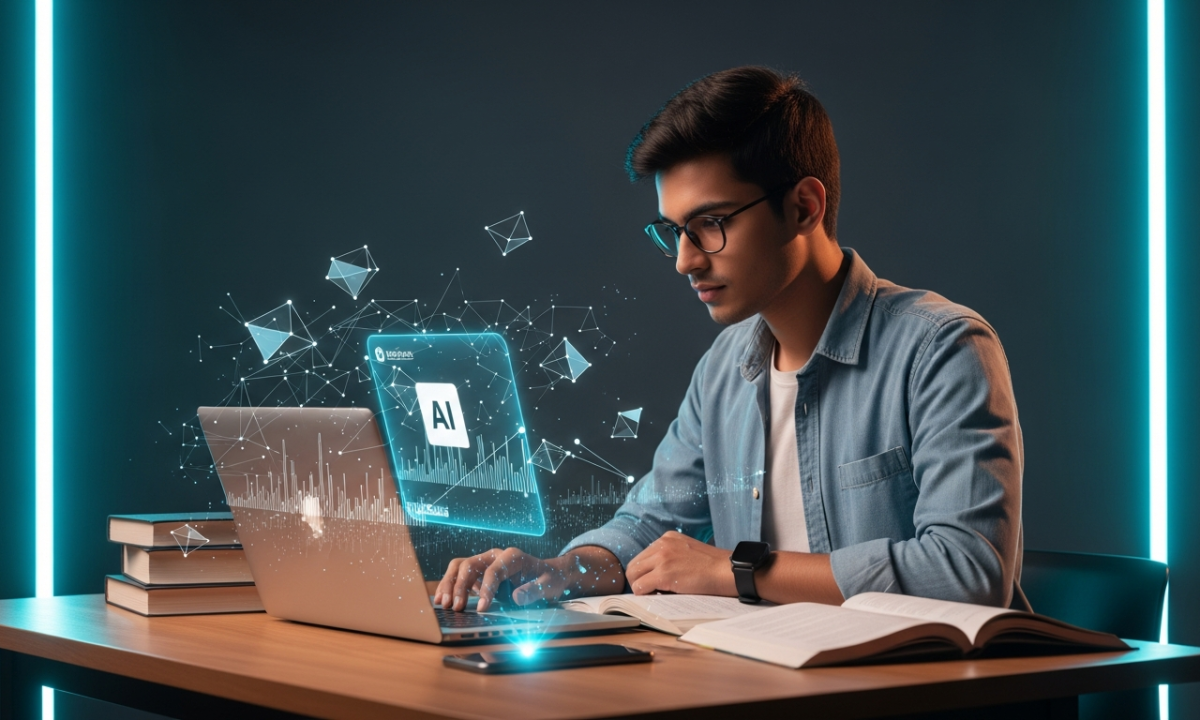
MPSC Group C Prep 2026: Smart Strategy Using AI
MPSC Group C Prep 2026: Smart Strategy Using AICracking the Maharashtra Public Service Commission (MPSC) Group C exam isn't just about reading heavy books for twelve hours a day anymore. The real deal is that modern exam patterns demand efficiency, precision, and smart revision. Thousands of aspirants study the exact same standard reference books, yet only a fraction make it to the merit list. Why? Because top rankers optimize their time, isolate their weak topics, and practice targeted questions. In 2026, artificial intelligence (AI) is the ultimate game-changer for serious candidates preparing for MPSC Group C posts like Tax Assistant, Clerk-Typist, and Sub-Inspector in State Excise.Why Traditional MPSC Study Methods Need an AI UpgradePreparing for MPSC Group C traditionally involves sifting through massive syllabus guides, manually organizing Previous Year Questions (PYQs), and endlessly searching for subject-specific notes. While hard work remains non-negotiable, doing repetitive administrative work manually slows you down. Actually, using AI models like ChatGPT, Claude, or specialized learning bots can cut your research time in half.1. Instant Syllabus Breakdown and Micro-Topic MappingThe MPSC Group C syllabus covers General Studies, Marathi, English, and Aptitude. AI can instantly break down broad sub-topics like Indian Polity or Maharashtra History into digestible micro-learning schedules. Instead of guessing what to cover in a two-hour study block, you can prompt an AI tool to generate a daily checklist based on your exam deadline.2. Smart PYQ Analysis and Pattern RecognitionAnalyzing the last ten years of MPSC Group C prelims and mains question papers takes weeks. AI tools can analyze digitized question banks to highlight high-yield topics, recurring conceptual questions, and weightage trends across history, geography, and economics.Step-by-Step Strategy to Use AI for MPSC Group C 2026Integrating AI into your daily routine is simple when you treat it as your personal 24/7 tutor rather than a shortcut to skip studying. Here is a practical framework to build your daily strategy:Generate Custom Practice Questions: Ask AI to create 20 multiple-choice questions (MCQs) on specific chapters, such as the 1857 Revolt in Maharashtra or Panchayati Raj systems, complete with detailed explanations for incorrect options.Simplify Complex Concepts: If a topic like Current Account Deficit or Constitutional Amendments feels overwhelming, prompt the AI: 'Explain this concept in simple terms with real-world examples.'Master Language Papers (Marathi and English): Use AI to practice vocabulary, idioms, grammar rules, and comprehension passages. You can ask AI to grade your practice translation passages or essay drafts instantly.Build Revision Summaries: Feed your typed notes into AI to generate quick one-page cheat sheets, flashcards, and mnemonic devices for factual memory retention.My Personal Take on AI for Competitive ExamsI always tell aspirants that AI is an execution multiplier, not a substitute for core textbooks like State Board books or standard reference materials. What's more, relying blindly on AI without verifying facts against official MPSC answer keys can lead to errors because language models occasionally hallucinate facts. Basically, use AI to organize, summarize, and test yourself, but keep your primary textbook right beside you for factual verification.Frequently Asked Questions (FAQs)Can AI replace standard MPSC reference books?No. Standard reference books and Maharashtra State Board textbooks remain the primary source of factual knowledge. AI tools are meant to supplement your reading by helping with summarization, self-testing, and routine management.How can I use ChatGPT for MPSC Marathi and English grammar practice?You can ask the AI to generate topic-specific grammar exercises (e.g., 'Generate 10 advanced Marathi grammar questions on Prayog along with answers and explanations'). You can also paste your written answers and request immediate grammatical feedback.Is AI safe to use for current affairs preparation?AI models have knowledge cutoffs, so relying on them for real-time news updates can be risky unless you use web-enabled AI tools. It is best to collect current affairs from trusted monthly digests and use AI strictly to create quizzes from those materials.Conclusion: Take Action TodayThe 2026 MPSC Group C examination will reward candidates who combine discipline with leverage. By adopting AI tools for smart syllabus mapping, PYQ analysis, and customized self-assessment, you gain a massive competitive advantage over conventional test-takers. Start small today: pick one tough topic from your syllabus, ask an AI tool to simplify it, and solve ten AI-generated practice MCQs to experience the power of smart preparation!